Newsletter Subscribe
Enter your email address below and subscribe to our newsletter

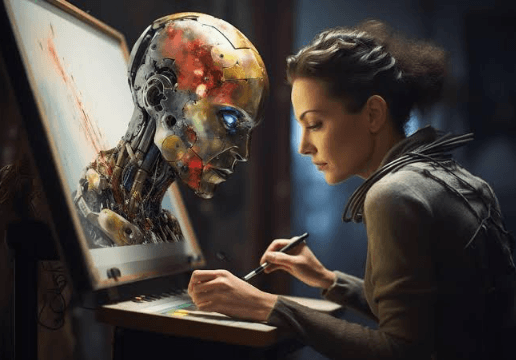
AI-generated art rests on systems trained with large image datasets. These models identify statistical patterns and learn to reproduce or reimagine visuals. They often begin from noise and iteratively refine toward coherent forms guided by objectives and checks. Transparency comes from model descriptions and evaluation methods, while originality arises from balancing randomness with learned constraints. The approach raises questions about data provenance and attribution, leaving the implications open for careful consideration as tools evolve.
AI-generated art refers to artworks created with the assistance of artificial intelligence systems, typically through algorithms that learn patterns from large datasets of existing images. The field is characterized by careful interpretation rather than mere mimicry, revealing creative bias and the influence of training choices. Onlookers should assess dataset provenance, provenance clarity, and algorithmic transparency to gauge intent, limits, and potential biases.
Models learn from big datasets by identifying statistical patterns across vast collections of images, textures, and styles. They rely on careful preprocessing, validation, and iterative refinements to minimize errors. The process emphasizes reproducibility and transparency in model training, with metrics guiding updates. Researchers acknowledge limits, such as bias and data quality, ensuring responsible use of a big dataset to balance creativity and accuracy.
From a random field of noise, generative systems orchestrate a transformation that yields structured imagery. These processes iteratively refine patterns, employing probabilistic guidance to converge toward coherent visuals. Noise to image workflows balance randomness with learned constraints, producing controllable outputs while preserving novelty. Transparency exists through model descriptions, objective functions, and validation methods, enabling informed critique of capabilities and limitations in creative contexts.
The emergence of AI-generated art prompts careful consideration of how creative authorship, attribution, and skill development will evolve, alongside questions about value, originality, and the ownership of digital works.
The impacts focus on ethical implications and copyright concerns, clarifying boundaries of creative ownership and the role of human collaboration, ensuring transparency while preserving freedom to explore and reinterpret artistic ideas.
Originality debate: AI art straddles novelty and remix, with outputs partly learned from existing works. The question remains unresolved; proponents cite emergent styles, critics warn of derivative limits. Remix ethics and transparency shape responsibility and freedom in creation.
AI art will not replace human artists; it augments paths of expression. Yet questions of AI ethics and creative agency demand vigilance, transparency, and shared responsibility as society negotiates evolving collaboration, borders, and freedoms within creative practice.
Artists earn royalties from AI-generated works through licensing models and royalty accounting, reflecting usage, provenance, and attribution. Transparent contracts specify percentages, audits, and reporting, enabling freedom while ensuring fair compensation for creators and contributors in evolving ecosystems.
Like a lighthouse in fog, AI cannot possess conscious intent or emotional agency. It simulates aims via data patterns, while researchers stress limitations, transparency, and uncertain autonomy, ensuring discussions remain precise and mindful of freedom to interpret outcomes.
See also: Drone: A Complete Guide to Features, Benefits, Types, Applications, and Buying Tips
AI systems rely on license checks, data provenance, and model controls to constrain output; safeguards emphasize copyright compliance and documentation, while promoting innovation ethics. They monitor usage, enforce attribution, and encourage transparent policies for an audience seeking freedom.
AI-generated art distills vast datasets into new visuals, guided by learned constraints and iterative refinement. From noisy beginnings, models sculpt form with statistical care, balancing novelty and fidelity. Transparency about data, methods, and evaluation remains essential, as attribution and ethics shape trust. In the end, these systems extend human creativity without claiming authorship, offering a reflective mirror where machines, like patient artisans, refract culture while respecting origin and responsibility. The future hinges on careful stewardship and open dialogue.